
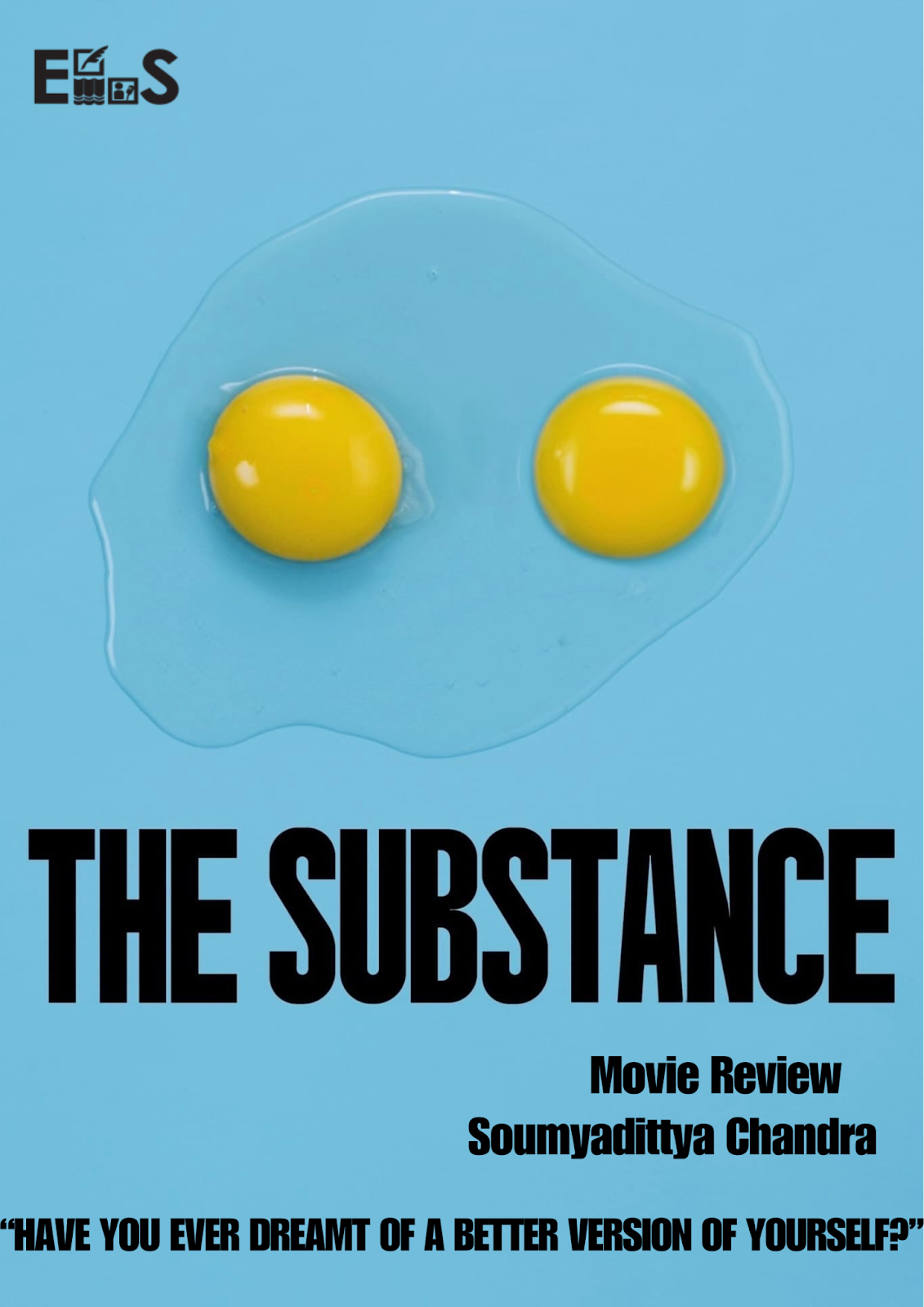
The desire to be young, to look better, in a society with unrelenting beauty standards is the primary premise behind Coralie Fargeat’s 2024 body-horror masterpiece, “The Substance”. In an era where cheap “weight-loss” drugs promise a painless way to achieve the “ideal” body type, the idea of a substance that clones you into someone who conforms to society’s idea of what’s perfect doesn’t seem that far off. But Fargeat twists this simple Fountain of Youth-like story into something much more dark and gory.
The story revolves around Elisabeth Sparkle, played by the brilliant Demi Moore. Elisabeth isn’t just your average woman grappling with aging—she’s a former starlet who’s transitioned into hosting a tacky aerobics show, clinging to the scraps of her once-glamorous life, yet unavoidably fading into irrelevance. Think neon spandex, big hair, and fake smiles masking her growing insecurities.
Enter “The Substance,” a black-market drug promising a magical rewind on her years. But there’s a catch: it doesn’t just make her feel younger; it physically transforms her into a younger version of herself, Sue, played by Margaret Qualley. At first everything is fine and dandy, but surprise, surprise, like any Faustian bargain, this fantasy soon spirals into a nightmare, a cyclical feast upon the Self, which may lead to the total destruction of both women, and the terror of the viewer.
The Substance is sparse, with a tight script and limited characters. The palette is bright and bold and the catchy beats by Raffertie impart a sense of speed to the film. The film is also rife with black comedy and satire, with the cartoonishly awful character of Harvey who cancels Elisabeth’s show. Fargeat employs fish-eye lenses and uncomfortable close-ups to make him appear even more grotesque and hypocritical for cutting Elisabeth’s show. He is the image of the prototypical ostentatious suit-clad self-absorbed executive, a caricature of the capitalist patriarchal industry.
The commodification of women is another key point highlighted in the movie. Sue’s exaggerated beauty—big earrings, neon workout gear, and a glossy allure—feels like a hyper-commercialized version of femininity, one that’s fetishized and exploited by the very people who dismissed Elisabeth. The zoom-ins on her body parts in her workout videos make this abundantly clear, those are the parts that people like Harvey are selling to the audience, reinforcing the worship of youth and its gravity-defying skin.
The film does have some shortcomings. The interplay between beauty, vanity, and oppression is a constant tightrope walk. Is our obsession with the self a byproduct of first-world consumerism or a reflection of the oppressive, capitalist standards of patriarchy? Should women be condemned for their perceived narcissism or understood as victims of a society that imposes these ideals? The Substance grapples with these questions but never fully settles on an answer.
However the film does not fail in uncovering issues that are so much more than skin-deep. Demi Moore perfectly acts out Elisabeth’s self-hatred and her inability to find beauty in herself. Although she looks as glamorous as anyone could hope to look, her face betrays a dissatisfied stare as she sees more flaws than beauty before her. This dysmorphia is something a lot of us may relate to, a constant need to fix what doesn’t need to be fixed.
In all, The Substance does a pretty good job at captivating, horrifying and making audiences reflect. After the credits roll, and once you get over the queasiness in your stomach, you will definitely be left asking, how far must one go to stay relevant?