
Time- an imaginary construct that is said to bridge one fleeting moment to the next, intangible yet omnipresent. It is fluid, continuous, and not a linear, rigid concept in the emotional and psychological realm; it has a tendency to loop and bleed into our lives in unexpected ways.
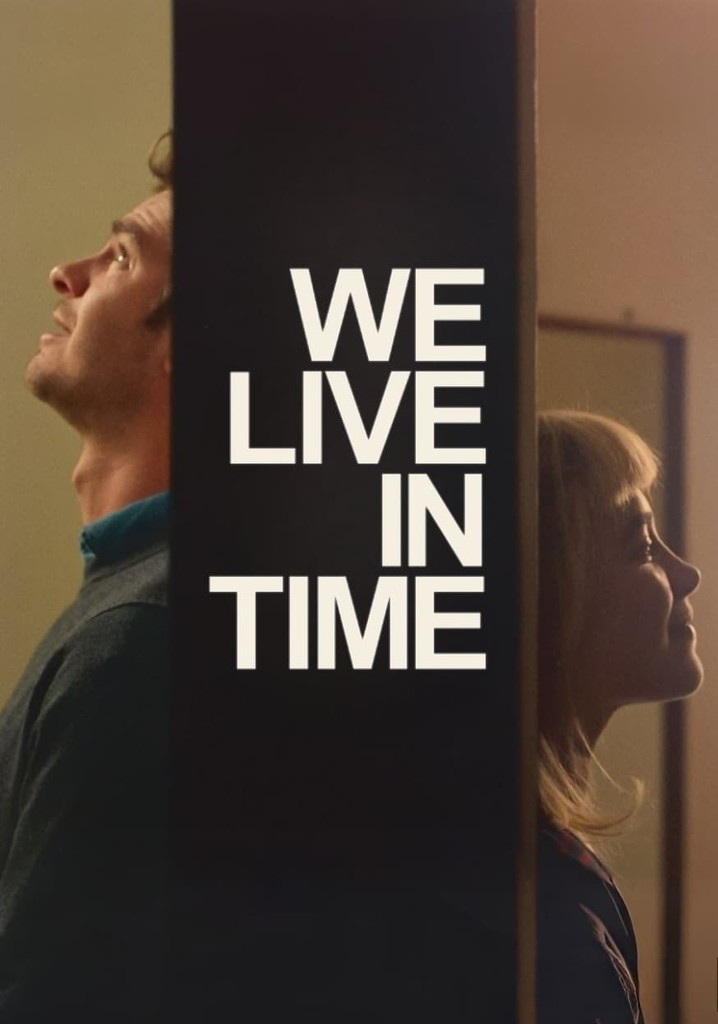
We Live in Time (2024), directed by John Crowley, starring Florence Pugh and Andrew Garfield, is a poignant exploration of love, loss, and such indeterminate prevalent perceptions of our limited time as conscious beings. The story follows the lives of our protagonists along three different timelines blending together, instead of a continuous linear storyline, lending individuality to an otherwise quite unoriginal premise.
Almut Brühl is a figure skater turned eminent up-and-coming chef, specialising in ‘Bavarian fusion’, who is days away from her restaurant’s inauguration. Tobias Durand is revealed to be an unassuming, endearing Weetabix representative, reeling from a recent divorce. They end up having a not-so-classic rom com meet-cute, sparking a profound connection that alters the course of their lives indelibly. Almut unknowingly invites Tobias and his wife to the opening where she learns about his divorce and they get romantically involved soon after.
Things get complicated when only a few minutes in, we’re faced with Almut’s terminal illness. Pugh continues to stun in such scenes, molding effortlessly into the shoes of a woman in her 30’s who doesn’t want to “just be someone’s dead mum”. It’s another theme tearjerkers normally shy away from – a woman’s decision to have children. Our protagonists hold contrasting viewpoints. Tobias is an avowed family oriented individual – “kids really are my thing“ and “…..meeting someone at our age. The clock is ticking.” Almut’s reaction – “I’m 34, not fifty fucking five.
Even though they have a serious falling out, this moment marks a significant point in their relationship; its resonance lies in its veracity. When asked what the rush is, Tobias replies with “Because I’m worried there’s a very distinct and real possibility that I’m about to fall in love with you.” He respects her decision but they are forced to have the same conversation again when Almut goes into remission after receiving her first diagnosis. A full blown hysterectomy was recommended as it would reduce the chance of a recurrence; but things had changed this time around. Almut wanted to ‘hang onto at least one’ of her ovaries – “Just because I never, in a general sense, saw myself having kids, doesn’t mean that there isn’t a world where I couldn’t see myself, in time, deciding to have them with you.
While we’re on the topic of fireworks and gushing hearts, there is one particularly memorable bit that stands out – Almut giving birth to a baby girl at a petrol station bathroom on New Year’s Eve. In a moment of intense vulnerability, she finds herself in a stark impersonal environment, typically associated with quick stops and passing moments. It’s surreal, raw and disorienting, weaving together the pivotal with the mundane.
A handful of years down the line, and we’re back to square one. The cancer has returned to Stage 3, and a tedious stretch of invasive treatments lie ahead. Almut is hesitant to go through the same ordeal yet again, afraid it might accidentally waste their time if it fails to work. Around this time, she gets invited by her former boss, Simon to represent Team UK in the Bocuse d’Or, a revered culinary showdown, which her employee and later fellow contestant Jade refers to as “the Culinary Olympics”. She agrees to the proposal in spite of the training being incongruous to the events unfolding in her life. As she articulates later to a livid Tobias who had just discovered her secret – “I don’t want my relationship with Ella to be solely defined by my decline”- so that should she ever reflect back on that period, she could be proud of her mother’s accomplishments.
The beauty of this movie lies in its subtlety, and the fact that none of it feels contrived, or a culmination to something. The critics might disagree. It promises us a tragedy, and a love story and somehow manages to do justice to both. This rings true for Florence Pugh’s portrayal of a competitive chef as well – it is a salient aspect of her life but does not feel excessively glamorised. If you were hanging around the Florence-verse during the early days of lockdown, you may very well know why this role is so exciting for her admirers.
The sublime cinematography, coupled with expectedly brilliant chemistry between both actors, and a stirring score by Bryce Dessner, has undoubtedly elevated We Live in Time to something truly special. Nevertheless, the movie isn’t without its imperfections. The character of Tobias has unfortunately not been fleshed out very well. We know little about his past, except for a few mentions of his ex-wife and why it did not work out between them scattered between the montages. Enter Andrew Garfield, our knight in shining armour, who with remarkable finesse, saved Tobias Durand from being another disappointing addition to the list of uninspiring male leads in romantic comedies. He imbues the character with a depth and emotional maturity which in all probability stemmed as a catharsis of his own experiences, and leads to a gripping, nuanced and mesmerising portrayal of grief and the fragility of life.
We Live in Time, in all its glory, isn’t ultimately a movie about death. Rather, it is another ingenious introspection on life. If all that we know and love is destined to perish, and nothing holds intrinsic value, should it truly influence our choices? There is no great revelation, just an underlying reminder that we are but a speck of dust in the vast expanse of the universe, our lives nothing but a blink-and-you-miss-it occurrence in the grand scheme of things. As the 1 hr and 48 mins slip away, it is the moments we hold dear – ephemeral, yet vivid – that leave a lasting imprint on our hearts and minds, even long after the credits roll.